Welcome to my blog

I hope you will find the recipe you are looking for your occasion here.

Now video instructions are available for select recipes and can be accessed at

Gardening and Cooking Made Easy

The latest 5 recipes are displayed on the
main page. For more recipes, you can browse the archive, click on the labels in the index to the left or use the Custom search below to look for a specific recipe.


Search for more results

Custom Search
Showing posts with label dal. Show all posts

Friday, May 19, 2017

Dal Makhani, dhaba style

Dal makhani is a rich lentil preparation. There are many recipes out there made with whole masoor as well as whole urad dal. Here is the recipe to make dal makhani using whole masoor - Dal Makhani recipe. The following recipe is a creamier version which is made using whole black urad dal.

There are many roadside small restaurants that produce delicious food called "dhaba". We used to always get an order of dal makhani with naan from there. And I remember the cook adding an entire slab of butter to just our portion of the dal that he was finishing before packing it off.  Of course it had a delicious creamy and smoky flavor. This version is a creamy version using a much lower fat alternative. The technique to provide it a smoky flavor that is usually found in the "dhaba" version is also provided. This technique can be used to add a smoky flavor to dal fry or any other curry preparation as well.

I have provided multiple methods starting with a traditional method to make it sauteeing onions and tomatoes before adding the dal. Also included are almost hand free methods which can me made in the stove top pressure cooker or the Instant Pot or an equivalent electric cooker.


Ingredients
2 cups whole urad dal
4 cups water + little more
1 tsp cumin/jeera
1 tbsp ghee
1-2 green chillies, optional, to taste
1 large onion, finely sliced, approximately 3/4 cup
1 tomato, deseeded and finely chopped, 1/3 cup
1 tbsp garlic, finely chopped or grated
1 tbsp ginger, finely chopped or grated
1 tsp kasuri methi
1/2 tsp turmeric
1/8 tsp hing powder
salt to taste
red chilli powder, to taste
1 cup milk
1 piece of charcoal, optional
1/8 tsp of ghee or oil, optional

Method
Wash the urad dal thoroughly and soak it in water for at least an hour.

Traditional recipe

In a pressure cooker, add the ghee and jeera. Once the jeera starts crackling, add the hing, green chilli, ginger, garlic and onion. Cook till the onion is lightly browned and then add the tomatoes and cook this till softened and starting to brown. Add the turmeric, chilli powder, kasuri methi and cook for a minute. Then add the soaked urad dal and water. Add salt, stir and close the lid of the cooker and cook for 8-10 whistles. Then let the pressure drop as it cools down. Once the pressure has dropped, open the lid and add the milk and bring it back up to a boil. Then follow the instructions below to give it the dhaba flavor provided in the "Adding the dhaba flavor" section.


Minimal intervention/work method

Traditional Pressure Cooker
In your pressure add the ghee and 2tbsp of water, so the base of the cooker is covered with either ghee or water to create a layer. Sprinkle cumin seeds on the ghee. Then mix the ginger and garlic with the sliced onions and spread this out in a single even layer in the cooker. Sprinkle the hing powder on this and add the green chilli as well to this layer. Cook this on high for 3 whistles. Release the pressure from the cooker. Open it, and you will find that the lower layer of the onion has been caramelized. Mix this well and then add the tomatoes in a heap or layer on top of the onions. Then add the spices, so that they are on top of a layer of tomatoes or onions and not touching the bottom of the vessel. This is to ensure that the spices don't burn. Add the turmeric, red chilli powder if using, kasuri methi and put the lid back on. Cook this on high heat till you get two whistles. Release the pressure. The tomato will be cooked and will have released water. Now turn on the heat, and keeping the cooker open, cook for 2-3 minutes stirring a few times till the water evaporates and you get a nicely browned gravy. Now, turn off the heat. Spread this gravy into an even layer. Drain the urad dal water, and discard the water. Add the soaked and drained urad dal to the cooker. Then pour in the four cups of water. Close the lid of the cooker and cook it on high heat for about 10 minutes (you will get 8-10 whistles). Let the pressure settle naturally, don't release it manually. Open the cooker and the dal will be creamy and soft. If you want it to be softer in consistency, add a little more water and pressure cook for 5 more minutes. After opening the cooker, once the cooker naturally depressurizes, add the milk and stir it well and heat the dal till it starts to boil, keeping the lid of the cooker open.  Then turn off heat. Do not pressure cook after adding the milk.

Instant Pot
In your Instant Pot liner pot, add the ghee and 1-2 tbsp of water, so the base of the cooker is covered with either ghee or water to create a layer. Sprinkle cumin seeds on the ghee. Then mix the ginger and garlic with the sliced onions and spread this out in a single even layer in the cooker. Sprinkle the hing powder on this and add the green chilli as well to this layer. Cook this in the Instant Pot for 5 minutes on manual mode. Release the pressure from the cooker. Open it, and you will find that the lower layer of the onion has been caramelized. Mix this well and then add the tomatoes in a heap or layer on top of the onions. Then add the spices, so that they are on top of a layer of tomatoes or onions and not touching the bottom of the vessel. This is to ensure that the spices don't burn. Add the turmeric, red chilli powder if using, kasuri methi and put the lid back on. Cook this for 3 minutes on manual mode. Release pressure. The tomato will be cooked and will have released water. Now turn on the saute mode in the Instant Pot and cook 2-3 minutes stirring a few times till the water evaporates and you get a nicely browned gravy. Now, turn off the saute mode. Spread this gravy into an even layer. Drain the urad dal water, and discard the water. Add the soaked and drained urad dal to the cooker. Then pour in the four cups of water. Close the lid of the cooker and put it in beans mode which defaults to 30 minutes. You can also cook it in manual mode for 15 minutes. Let the pressure settle, don't release it. Open the cooker and the dal will be creamy and soft. If you want it to be softer in consistency, add a little more water and pressure cook for 5 minutes more in the manual mode After opening the cooker, once the cooker naturally depressurizes, add the milk and stir it well and heat the dal on saute mode, till it starts to boil and  then turn off heat.


Adding the dhaba flavor
Now to give it the dhaba flavor. Place a small steel bowl in the center of the dal. Using a pair of tongs, hold the charcoal and smoke it on the burner flame or on a candle (this takes longer but if you have an electric stove, this is your option). Once it starts to smoke, place it in the steel bowl afloat the dal and sprinkle a few drops of ghee or oil on it. Then place a lid to cover the pot and entrap the smoke inside. Keep it for 2-5 minutes depending on the intensity of the smoky flavor that you are looking for.  Serve hot with rice.


Tips
If you don't have whole urad, you can also use split black urad dal or even masoor dal. Don't use the one where the black peel has been taken off the dal. 

Wednesday, August 17, 2016

Dal Bafla

Dal Bafla is a wonderful dish that is similar to Dal Baati. The very first time I ate it was in Indore at my Aunt's house. The baflas were cooked in a traditional kiln and served submerged in a bowl of ghee with piping hot dal. Absolutely delicious! I ate this over 15 years ago, but still remember the experience vividly. At that time I didn't realize that Dal Bafla and Dal Baati were two individual dishes. I have heard both names often over the years, but only knew how to make Dal Baati so far.

To make baatis, I usually add baking soda and yogurt to soften them up a little. If you skip that then they turn out really hard. The best part about the bafla is that it is soft from inside and crisp from outside, so it is very easy to eat it. It is soft because it is boiled first and then baked.

It was just recently that I came across the recipe on a food group. I had to try it out immediately to see what the differences between the baati and bafla are. The dal I made along with this was also different than what I make for baatis. Once  you have bafla or baati ready, you can use any dal preparation with it.  I have included the dal recipe that I made along with the bafla as well. It is a very delicious preparation that you can also use with rice or rotis.

I am sure you will love this variation once you eat it.


Ingredients
For Bafla
3 cups of wheat flour (used the same flour that I use for chapatis)
½ cup semolina/rava
½ cup oil
salt to taste (approx. 1 tsp in the dough and 1 tsp to add in the water)
1 tsp turmeric
1 tbsp oil
ghee

For Dal
2 cups cooked chana dal
¼ cup cooked tur dal
1.5 onions, finely chopped
3 tomatoes, finely chopped
1 tbsp garlic paste
1 tbsp grated ginger
1/2 tsp red chili powder
1 tsp coriander powder
1 tsp cumin powder
5-10 curry leaves
2 tbsp oil
pinch of hing
½ tsp mustard seeds
½ tsp cumin seeds
salt to taste
cilantro/coriander leaves for garnish


Method 
For the bafla
Mix together the semolina, flour and salt till the ingredients are well mixed. Then added oil and rub it into the flour. Add water, a little at a time till it comes together as a dough. Knead it a little. It is on the drier and hard side. Let it rest for 10-15 mins. (The dough was very hard and tended to crack when rolling the baflas. I think I could have added another tablespoon of water to have smoother baflas.)
Take about a fistful of dough and make round balls and then press slightly to flatten them a little.


In a deep pot, added water, turmeric, oil and salt and let it come to a rolling boil. Then add the dough balls to this water. They will sink. Stir them around occasionally as they cook, till they become lighter and float a little. Cook on medium heat. It takes about 10-15 mins.
To eat, crush the baflas in a bowl, add ghee to these and then pour dal over the baflas. Enjoy hot!

Keep a pizza stone in the oven and preheat the oven to 350F while the baflas cook in water. Remove baflas, dry them with a cloth and put it on the hot pizza stone and let them cook for about 20-25 mins, turning them over a couple of times till they are crisp on the outside. Retain the water that the baflas have been cooked in to use in the dal.


Once baked, remove them from the oven and keep warm in a casserole till ready to heat. The traditional way is to immerse the warm bafla in ghee after creating a little crack in it so that the ghee is able to permeate the bafla. I didn’t do this as I wanted to control the amount of ghee that was in each serving.


For the dal
Heat oil in a saucepan, add mustard and cumin seeds. Then add the hing, and curry leaves. Then add onions, ginger and garlic. Cook the onions well and then add the chopped tomatoes. Once these are cooked, add the cumin, coriander and chili powders and mix well. Then add the cooked tur and chana dals. Mix well, then add salt and the water saved from cooking the baflas till the desired consistency of the dal is achieved. Boil this till well cooked. Garnish with cilantro.

Tips
If you don't have a pizza stone, use a baking sheet to bake these. If you don't want the yellowish tinge to the bafla, don't add the turmeric to the boiling water.

Thursday, January 31, 2013

Dal Fry with Three Dals- A Delicious Mixed Lentil Soup


It has been a while since I have updated the blog. While the cooking continues, I find myself trying to manage time to be able to do all the tasks at hand. I finally got some time today and decided to pen down this delicious dal fry recipe that I had made for an elaborate dinner a few months ago. Everyone loved it, especially the kids. I got the best compliments from my friend's eight year old who asked her mom to get the recipe so that she could have it at home as well. Well, finally here it is. I made it again last week and thought this is a great recipe to make during these cold winter evenings. Just the thought of steaming hot, delicious dal served with some jeera rice, makes my mouth water. A perfect weeknight comfort meal indeed!


Ingredients
1 cup tur dal/arhar dal/ pigon peas
1/2 cup mung dal - split, peeled yellow mung dal
1/2 cup chana dal/split pea
a pinch of asafoetida/hing
1/2 tsp turmeric
1 tbsp tsp oil
1/8 tsp jeera/cumin seeds
1 bay leaf
1-2 green chillies
3 garlic cloves, finely sliced
1 inch ginger, finely minced or crushed
1 red onion, diced finely
2 tomates, diced finely
cilantro/corriander leaves, chopped to garnish
5-6 cups  water
2 tsp garam masala
salt to taste


Method
Mix together the tur dal, chana dal and mung dal. Wash the mixture at least 2-3 times. Then add double the quantity of water compared to the dal, so in this case, 4 cups of  water, hing and turmeric and cook it. I generally use the pressure cooker  to cook the dal (see tips for how to cook the dal if you don't have a pressure cooker). Once cooked, mash the dal a little with a spoon and keep aside. In a deep pan, heat some oil. Then add the cumin seeds and bay leaf. Once they start to brown and change color, add the chillies, onions and the ginger and garlic. Cook this till the onions become transparent and start to change color and the raw ginger garlic smell goes away. Then add the tomatoes and cook them well. Then add the garam masala and fry for a couple of minutes till you can smell the aroma of the masala. Now, add the dal and mix well. Add some water if the dal is too thick. Generally, dal fry is thicker dal (similar to creamy  soups) and not very watery. Add the salt and bring it to a boil and turn off the heat. Sprinkle some cilantro for garnish. Serve hot with rice, pulao, roti or naan.


Tips
If you don't  have a pressure cooker, this is how you can cook the dal without having to boil it for hours. Soak the dal for an hour in warm water. Then in a deep pan, boil the dal with at least two times the water, turmeric and hing. Stir occasionally, so that the dal at the bottom of the pan doesn't burn. Turn off the heat when the dal is cooked through, soft and can be easily mashed (about 30-40 minutes) .
As the dal cools down it will thicken. So when you reheat the dal, add a little water and then reheat it. Since the onion and tomato have not been browned, the dal will retain the yellow color. If you do brown it, then that is also okay.

Tuesday, December 18, 2012

Rasam/Rassam - A Spicy, Warm Soup

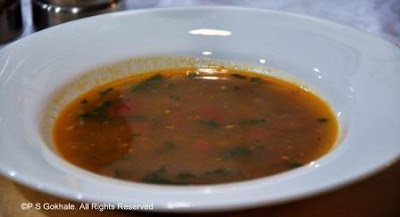
Rasam is an absolutely delicious Indian soup, which is often lentil based. It is a staple in the southern states of India and just like dal preparation, you will find a different recipe in every home. It is one of my favorite foods. It is the perfect appetizer soup to start your dinner with. Generally, it has a consistency similar to clear soups, however I do end up making it thicker, as I enjoy this with a bowl of white rice topped with some ghee. It is often prepared when someone at home is feeling a bit under the weather and is down with a cold or cough. This recipe has a lot of black pepper and garlic and provides a comforting feeling when you sip it. The spiciness helps clear up the sinuses too. I still remember the time when I was really sick and a neighbor had dropped in to say hello. She was back soon with a bowl of piping hot and spicy rasam and it really cheered me up.


Of course, I don't have to be sick to enjoy a bowl. I make this really often. I used to use the ready made spice mix to prepare rasam until a good friend gave me her recipe. Ever since then, I have been making this wonderful recipe. It is really easy and delicious and perfect for this cold weather.


Ingredients
1 tsp jeera/cumin seeds
1/2 - 1 tsp black peppercorns, adjust to taste
2-4 garlic cloves, adjust to taste
2 tsp ghee(clarified butter)/oil
1-2 green/red chillies, to taste
7-8 curry leaves
1/8 tsp mustard seeds
1 pinch hing/asafoetida powder
1 tbsp cooked tur dal (pigeon peas) (optional) - see tips section for cooking instructions
1 tomato, diced
salt to taste
1/2 tsp tamarind paste
2 cups water (500 ml)


Method
Dry roast the cumin seeds and peppercorns, till they are fragrant. Grind these into a coarse powder and then add the garlic pods to it and grind them together to make a paste.
In a deep pot, heat the ghee and add mustard seeds to it. Once they start cracking, add the hing, curry leaves, chillies and paste and roast it till the garlic gets cooked, about a minute. Do not let it brown.
Add the diced tomatoes and  cook till softened. Then add the cooked lentil, stir and add the water. Once it starts to boil, add the tamarind paste and salt.  Let it boil for a couple of minutes. Garnish with cilantro leaves and serve hot.


Tips
If you want, you can completely skip the lentils and add another tomato instead. You can also make it thicker by adding more cooked lentils. I generally like it thicker like sambar or dal, so that I can eat it with white rice as part of the main course rather than a soup. In that case, I add about 1 cup of lentil instead of 1 tbsp. Also, I increase the amount of the salt, tamarind paste and if I want it spicy, I also add more peppercorns to the paste and increase the number of garlic pods to 4 instead of 2.
You can also add a tsp of ready made rasam masala powder to the rasam after adding the cooked lentils for a slightly different taste. I usually use the MTR brand rasam masala powder that can be found in the Indian grocery store.
To cook the lentils, I use a pressure cooker. I use double the amount of water to cook the lentils. So for example if I have 1 cup of pigeon peas (tur dal), I will use 2 cups of water.  Wash the lentils three times. Then, add the water to the lentils. Next I add 1/8th tsp of turmeric and a pinch of asafoetida powder and then pressure cook the lentils till they are completely cooked through and soft. It takes about 3-5 whistles (10-15 mins) based on the type of cooker I use.

Thursday, May 31, 2012

Mung Dal with Garlic

Sometimes one comes across a dish in their life that stays with them forever. The taste and fragrance of the food gets so deeply embedded in your mind that just a whiff of a similar smell and it can take you back to the first time you tasted it. This dish for me is this particular prepartion of mung dal (split yellow mung). I still remember the first time I tasted it. I was a kid in school and had accompanied my parents to a place near Nashik (a city in Maharashtra). For the week that we were there, we lived in the guest house which had a large dining hall. We had to go to the dining hall for every meal and I was absolutely fascinated by the place. It was large, had lots of tables and the plates and bowls used to always be arranged on the tables, but were always kept inverted. We needed to place them back in the upright, correct position and then the servers would come out and serve us the food. I can't remember a lot about the trip, but the memory of this dal is deeply entrenched in memory and my senses. Ever since I started experimenting with recipes, I have been trying to determine the right ingredients and proportions, so that I could taste it again. And I finally got the exact taste last week!!  I am delirious with joy that I was able to recreate the recipe. While it is extremely simple, it is delicious and the perfect comfort food to take me back into the cosy comfort of childhood.


Ingredients
1 cup mung dal - split, peeled yellow mung dal
a pinch of asafoetida/hing
1/2 tsp turmeric
2-3 tsp oil
1/4 tsp jeera/cumin seeds
3 large garlic cloves, finely sliced
1 green chilli, slit lenghtwise into two
10 curry leaves
1/4 cup cilantro/corriander leaves, chopped
3-4 cups  water
salt to taste


Method
Wash the mung dal three times and then add two cups of water, asafoetida and turmeric to it. Pressure cook it if possible as it will be the fastest method to cook ot. If you don't have a pressure cooker, you can boil it on the stove top till it is cooked through and is soft and mushy. You may need to add more water if needed.


In a deep pan, heat the oil, add the jeera seeds. Once they start to crackle, add the curry leaves. Then add the garlic and green chilli and let that fry for a minute. We don't want the garlic to start turning brown. As soon as the garlic looks cooked, add the cooked mung dal. Then add water. Add at least 1 cup of water. You may want to add more water if you want a thinner consistency. Add salt. Bring the dal to a boil. Turn off the heat and immediately add the cilantro leaves. Serve hot with rice or roti/chapati. You can also serve it as a lentil soup. It is just delicious on its own.


Tips
If you are not pressure cooking the dal, you can soak it for an hour before you cook it. That will reduce the cooking time. You can also use dry red chilli instead of green chilli, but that will change the taste of the dal slightly. Mung dal thickens up as it cools down and you may want to add additional water to thin it out while reheating.

Saturday, December 10, 2011

Dal Fry - Seasoned Lentil Soup

I must start by acknowleding the long gap between the last post and this one. And for those of you who read the blog regularly, I owe an explanation. Generally, I write about only food related topics on this blog, however since the explanation is non food related, here goes. For the longest time I have tried to stay away from synchronizing my email account to my phone and hence had to long in daily to check and respond to emails. And usually after I did that, I used to start my next blog post. However, between the last blog and this, I finally caved in and added my email account to my phone. Since then, I have noticed a significant impact on the amount of time I spend on my computer. I have become more of a consumer of information rather than producing it and I didn't even realize it. Have any of you faced the same issue? Are you spending a lot more time away from your computer and on your smart phone (for non-office related activities)?


Well, now that you know the reason for my absence, I hope you will take some heart in the knowledge that I have made a conscious decision to attend to my blog more regularly. With that said, let me dive into the absolutely delicious recipe for making "dal fry" which is made from lentils and has a spicy seasoning. It is one of the most versatile recipes and I will be posting many different versions of the same in the future as well. The following is one I make most regularly and the dal goes well with rotis or rice.


Ingredients
1 cup split pigeon peas/tur dal
2 cups water
1/8 tsp turmeric powder
A pinch of hing/asafoetida powder
1 tbsp oil
1/8 tsp cumin seeds
1/8 tsp mustard seeds
1 red onion, finely diced
1 tomato, finely diced
1-3 green chillies, to taste
1 tsp garam masala (optional)
1 tsp ginger garlic paste
some cilantro/corriander for garnish
salt to taste
additional water to thin out the dal


Method
Mix together the tur dal, water, hing and turmeric and cook it. I generally use the pressure cooker  to cook the dal (see tips for how to cook the dal if you don't have a pressure cooker). Cook it for 5-6 whistles or in the Instant Pot for 12 minutes on manual mode at high pressure. Let the pressure release naturally. Once cooked, mash the dal a little with a spoon and keep aside. In a deep pan, heat some oil. Then add the mustard and cumin seeds. Once they start to crackle, add the chillies, onions and ginger garlic paste. Cook this till the onions start to brown and the raw ginger garlic smell goes away. Then add the tomatoes and cook them well. Then add the garam masala and fry for a couple of minutes till you can smell the aroma of the masala. Now, add the dal and mix well. Add some water if the dal is too thick. Generally, dal fry is thicker dal (similar to creamy  soups) and not very watery. Add salt. Bring it to a boil and turn off the heat. Sprinkle some cilantro for garnish. Serve hot with rice, pulao or roti.


Tips
If you don't  have a pressure cooker, this is how you can cook the dal without having to boil it for hours. Soak the dal for an hour in warm water. Then in a deep pan, boil the dal with at least two times the water, turmeric and hing. Stir occasionally, so that the dal at the bottom of the pan doesn't burn. Turn off the heat when the dal is cooked through, soft and can be easily mashed (about 30-40 minutes) . Add a squirt of lemon/lime juice to the dal for a tangier taste.
You can use the same method and ingredients to make dal fry using chana dal (yellow split peas). 

Sunday, September 11, 2011

Daal Baati (Dal Bati) - Recipe for the dal

For information related to Dal Baati and the recipe to make Baati, see my previous post. The dal for the dal baati recipe is unique because it is made using urad dal. While I know that urad dal is a key component of idli and dosa batters, I haven't really seen it used as a main ingredient in too many dal recipe. The freshly baked, ghee dipped baati, is broken down into small pieces in a bowl and then piping hot dal is poured over it. The result is absolutely lip smacking. If you make this dish often, it is best to cut back on the amount of ghee that is used after the baking process to prevent those calories from adding up. But it is absolutely okay to indulge once in a while!


Ingredients
1 cup urad dal
4 tbsp split mung (yellow mung) dal
3 tbsp chana dal (yellow split pea)
3 cups water
a pinch of asafoetida powder
2 tbsp ghee or oil
1/8 tsp cumin (jeera) seeds
2 black cardamom (badi elaichi)
2 bay leaves (tej patta)
1 inch cinnamon
2 cloves garlic, crushed or finely minced
1 inch ginger, finely grated or ground
1/2 cup red onion diced
2 tomatoes diced
1-2 green chillies
red chilli powder to taste
salt to taste
1 tsp dhania (corriander) powder
1 tsp garam masala (optional)
1/8 tsp turmeric
additional water to thin out the dal
cilantro/corriander leaves, chopped for garnishing


Method
Mix the three dals together and add water to it. Add asafoetida and cook. See tips on alternatives of cooking dals. The dal mixture should be cooked through and soft. In a large, deep pan, heat the oil or ghee. To this add jeera, black cardamom, cinnamon and bay leaves. Cook these till you can smell the spices. Take care to prevent them from burning. Then add the green chilli, onion, ginger and garlic. Cook these till you do not get the raw garlic smell. The onion should be at the slightly browning phase. Then add the tomato and cook till the tomatoes are cooked through. Then add the turmeric, dhania powder and garam masala. If you want the dal to be spicy, you can add red chilli powder at this stage. Cook the spices for a couple of minutes and then add the cooked dal mixture. Add some water to thin it out a bit. The consistency should not be too watery. It should be like a thick soup. Turn off the heat when the dal boils. Garnish with chopped cilantro/corriander leaves.


Tips
The fastest method to cook dals is using a pressure cooker.  If using a stove top cooker, cook it for 5 or 6 whistles and if using the Instant Pot, 12 mins on manual mode, at high pressure. Let the pressure release naturally. However, if you do not have a pressure cooker, pre-soak the dal in warm water for a couple of hours. Then add water to the soaked dal and cook till soft. If spices being friend initially burn, it is best to start again with fresh oil. Burnt spices add a bitter taste and can potentially alter the taste of the entire dish. The list of ingredients may look daunting, but most of these should be easily available in your Indian grocery store.

Sunday, May 8, 2011

Puffed Rice Sweet Balls - Kurmura/Murmura Ladoo

This is one of the simplest recipes which takes me right back to childhood. I remember these puffed rice sweet balls that I used to love as a little girl. My mom made these often and it was a delicious treat that I used to look forward to. Now that I have a little girl, I thought this would be the perfect recipe to make with her. And was I right! Both of us had a marvelous time measuring out the ingredients and mixing them together. She enjoyed eating these treats as I rolled them out. This is a recipe that can make any day seem special. You can use this recipe to spend a nice time mixing things, getting messy, tasting as you eat and just having a lot of great fun. I hope you and your kids enjoy this recipe, just as much I did as a child and now do as a mom. Dedicated to my dear mom on Mother's day. Happy Mother's Day to all you wonderful moms out there.


Ingredients
1 tsp ghee/ clarified butter
1 cup jaggery, grated or cut fine
3 cups puffed rice/kurmura/murmura
2 tbsp dal/dalia (roasted chana/gram dal)
3 tbsp peanuts, unsalted


Method
Heat the ghee in a pan, then add the jaggery and let it melt. Once, the jaggery starts becoming frothy, turn off the heat. Add the puffed rice (kurmura), peanuts and dal and mix it all together. Let it cool so that it's easy to handle. Then take a fistfull of this mixture and roll it into balls. (Caution: The mixuture gets very hot, so make sure you let it cool a but before rolling it into balls.) The mixture cools down rapidly and you may not be able to roll all of it into balls. If you are unable to roll it into balls before it cools down completely, then eat the sweet puffed rice as is.


Tips
Coat your hands with a little bit of ghee so that the puffed rice mixture doesn't stick to your hand. The mixture will not roll into balls once it cools down completely.